Buying a Home Without Setting Foot Inside: How Remote Homebuying Became the New Normal
WHY PAY MORE?
Buying a Home You've Never Actually Walked Through — Welcome to the New Normal
Author: Victor Coll

Not that long ago, making an offer on a house you’d never actually walked through felt… off. Not illegal or anything. Just questionable. The kind of thing that makes your agent pause for a second before responding.
Now it’s normal. Or at least normal enough that people don’t question it the same way anymore.
But here’s the part that doesn’t get talked about much—buying a home sight unseen isn’t the same everywhere. What works in a slower, more predictable market doesn’t always translate to a place like Florida, where insurance, flood zones, and neighborhood quirks can change the math pretty quickly.
And people are still doing it anyway.
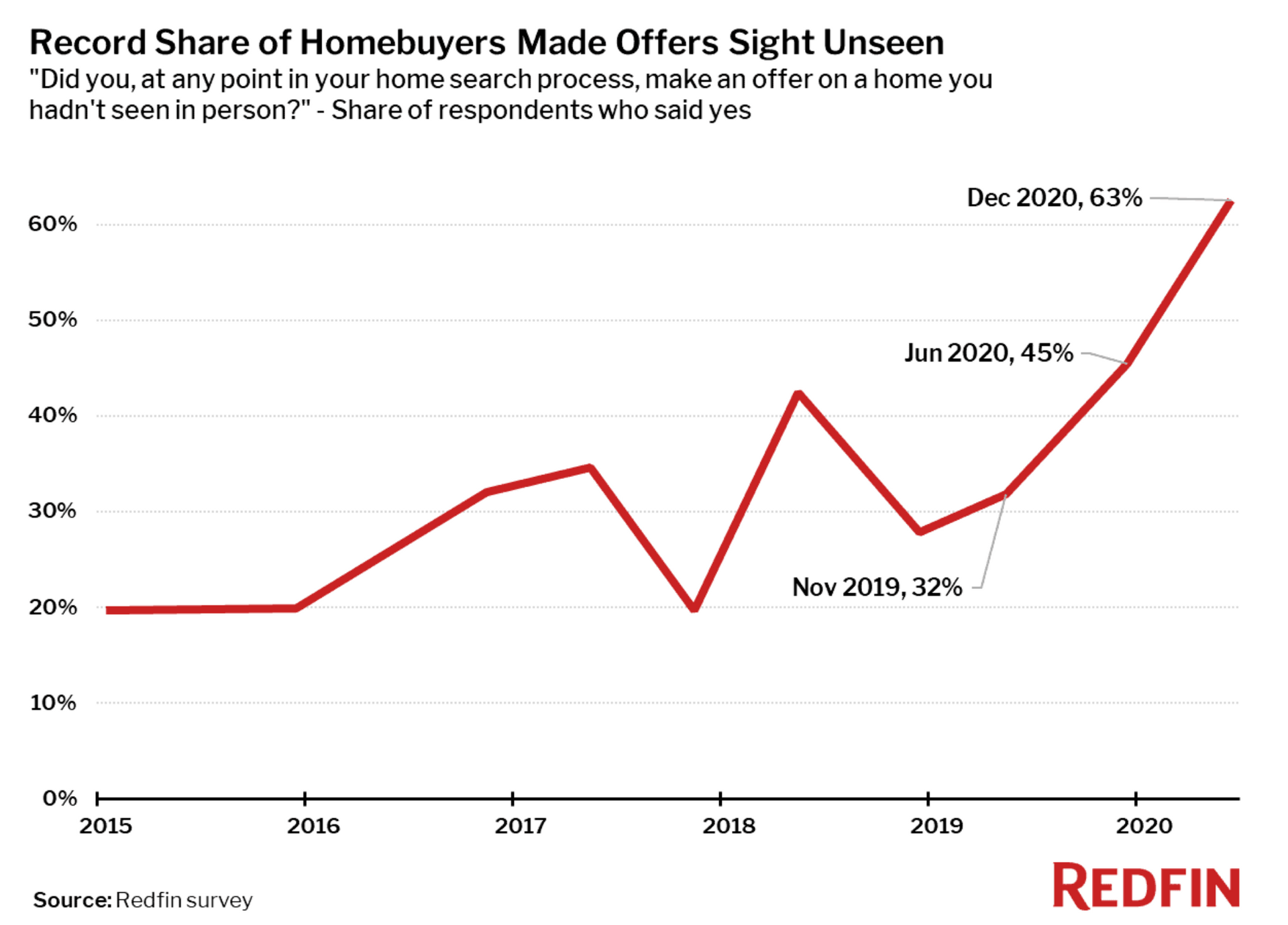
According to a Redfin-commissioned survey, 63% of buyers in 2020 made an offer on a home they never saw in person. That’s not a small shift. That’s a completely different way of buying houses. A year earlier, it was 32%. Before that, it barely showed up.
Something definitely shifted—and not slowly either.
The Shift Happened Fast—Almost Too Fast
What’s interesting isn’t just the number. It’s how quickly it happened.
Redfin surveyed over 1,900 homebuyers across 32 markets, and at the same time, behavior started changing in ways that didn’t feel gradual at all. Video tours went from basically nothing—less than 1% of requests—to about one in ten by the end of the year. 3D walkthrough views jumped more than 500%.
That’s not slow adoption. That’s more like everything just flipped at once.
And once people got used to it, they didn’t really go back.
Remote Work Didn’t Just Keep People Home—It Let Them Leave
A big part of this had nothing to do with real estate itself.
It was remote work.
Suddenly, where you lived didn’t have to line up with where you worked. And once that door opened, a lot of people walked through it.
In 2020, about 27.8% of Redfin users were looking to move outside their current metro area. That’s a pretty big chunk of people searching in places they didn’t live—and in some cases, hadn’t spent much time in at all.
If you’re moving across the country, you’re not casually dropping in for showings. You’re relying on what you can see through a screen, plus whatever your agent tells you.
That’s how this whole thing stopped feeling weird.
It Works—Until People Start Cutting Corners
There’s this idea floating around that buying a home sight unseen is basically guessing. It’s not—at least not when it’s done properly.
Most buyers who pull this off follow the same general process. They narrow things down using photos and walkthroughs, they do live video tours with their agent, and they keep contingencies in place—especially inspections.
That last part is where people get themselves into trouble.
Because a video tour can show you a lot, but it can’t show you everything. It won’t tell you how the house feels, or what’s slightly off, or what only shows up when someone’s physically there looking for it.
The buyers who run into problems are usually the ones who move too fast or assume what they’re seeing is the full picture.
And it usually isn’t.

Where This Gets Complicated—Especially in Florida
This is where the national data starts to fall apart a little.
Buying sight unseen in Florida isn’t just about the house. It’s everything around it that tends to catch people off guard.
Flood zones are the obvious one.
Places like Jacksonville Beach, Nocatee, or anything near the St. Johns River can fall into FEMA-designated zones where flood insurance isn’t optional—it’s required if you’re financing. And it’s always separate from your homeowners policy.
A lot of out-of-state buyers don’t realize that until pretty late in the process.
Then there’s insurance overall. Florida’s average annual homeowners insurance cost hit around $8,292 in 2025. That’s before flood insurance gets added in. For someone relocating from a state where those costs are half—or less—that’s a pretty big shift in what the home actually costs to own.
And none of that shows up in the listing. Not in a way that actually prepares you for it, anyway.
The Part You Don’t See on Camera
Even beyond costs, there’s another issue that’s harder to quantify.
A place can look great online and still feel completely different in person.
A street can photograph perfectly and still flood every summer. A neighborhood can seem quiet during a scheduled video tour and be something else entirely at night or during the week. HOA rules, traffic patterns, small things that add up—none of that comes through in photos or walkthroughs.
Local agents pick up on this almost automatically.
Remote buyers usually don’t. At least not right away.
This Didn’t Go Away—It Just Leveled Out
The 63% number from 2020 was extreme. No question.
But what matters more is what happened after all of that.
By 2025, around 20% of buyers were still making offers sight unseen. Not as high as before, but nowhere near where it used to be either. And something like 74% of millennials said they’d still consider doing it.
That’s not a temporary spike. That’s a shift that stuck—just at a lower level.
What This Actually Means Now
If you’re buying, it means you have to be more careful, not less. You’re working with less direct information, so the margin for error is smaller. Who you work with matters more. What you check matters more.
If you’re selling, it means your listing has to carry more weight than it used to. For a lot of buyers, the photos and walkthrough are the first—and sometimes only—impression they get.
If those don’t land, they move on.
The Shift That Stuck
A few years ago, Redfin’s chief economist said virtual home tours were here to stay.
At the time, that sounded like a prediction.
Now it just feels obvious.
The numbers came down, but the behavior didn’t disappear. People figured out they could buy homes this way without completely getting burned—and that was enough.
And once people realize they can do it this way… they usually don’t go all the way back.